Claude Skills vs MCP

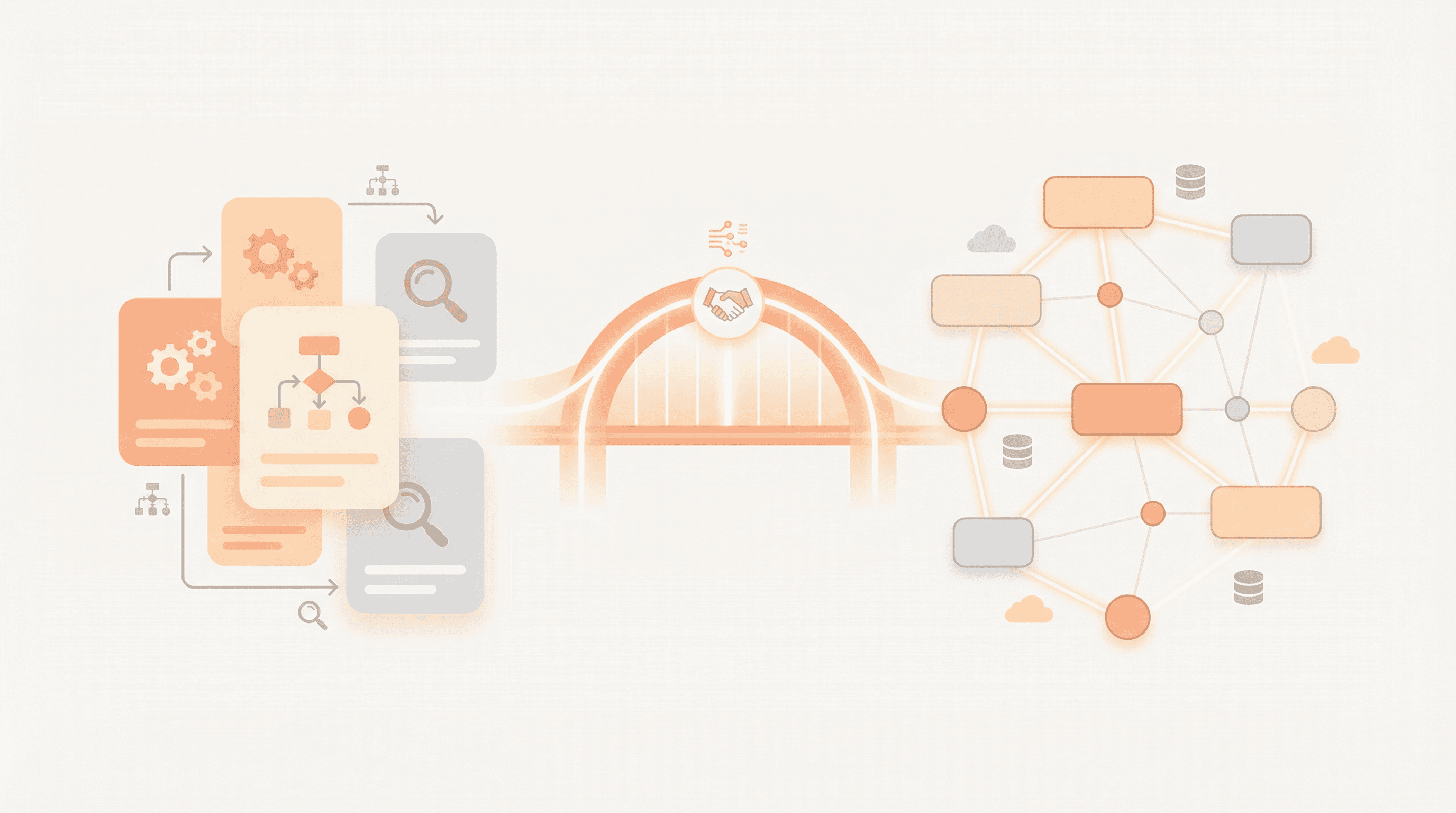
In the rapidly evolving landscape of artificial intelligence, Anthropic has introduced two powerful yet distinct technologies that are shaping the future of AI-powered workflows: the Model Context Protocol (MCP) and Claude Skills. While both aim to enhance the capabilities of AI assistants like Claude, they serve fundamentally different purposes. This article provides a comprehensive comparison of MCP and Claude Skills, exploring their architecture, use cases, and how they can be used together to build more powerful and intelligent AI applications.
What is the Model Context Protocol (MCP)?
Introduced in November 2024, the Model Context Protocol (MCP) is an open-source standard designed to connect AI applications with external systems and data sources [1]. Think of it as a universal translator or a "USB-C port for AI applications" [2]. Before MCP, connecting an AI to a new data source or tool required a custom integration, a process that was both time-consuming and difficult to scale. MCP solves this by providing a standardized protocol that allows AI assistants to seamlessly communicate with a wide range of external services, from databases and APIs to business tools and development environments.
At its core, MCP enables a two-way connection between an AI client (like Claude) and an MCP server, which exposes data and tools. This architecture allows developers to either build MCP servers to make their data and services accessible to AI applications or create MCP clients that can connect to this growing ecosystem of servers. This standardized approach not only simplifies development but also fosters a more interconnected and capable AI ecosystem.
What are Claude Skills?
Launched in October 2025, Claude Skills represent a different approach to AI customization [3]. Instead of connecting to external systems, Skills provide Claude with procedural knowledge—step-by-step instructions on how to perform specific tasks in a repeatable and consistent manner. A Skill is essentially a folder containing a SKILL.md file with instructions, and optionally, scripts and other resources. These Skills teach Claude how to do things like create documents with your company's branding, analyze data using a specific workflow, or even automate personal tasks.
One of the key innovations behind Claude Skills is the concept of progressive disclosure [4]. When Claude starts, it only loads the name and a brief description of each available Skill. This allows it to be aware of hundreds of Skills without being overwhelmed. Only when a user's request matches a specific Skill does Claude load the full instructions and resources for that Skill into its context window. This makes Skills incredibly efficient in terms of token usage and allows for a high degree of specialization without sacrificing performance.
Head-to-Head Comparison: MCP vs. Claude Skills
To better understand the differences between MCP and Claude Skills, let's compare them across several key dimensions:
| Feature | Model Context Protocol (MCP) | Claude Skills |
|---|---|---|
| Purpose | Connects AI to external tools and data sources | Encodes procedural knowledge and workflows |
| Architecture | Client-server protocol for external integration | Filesystem-based resources with progressive disclosure |
| Loading Mechanism | Remote tool calls to external servers | Dynamic loading of local instructions and scripts |
| Context Efficiency | Dependent on API call complexity | Highly efficient due to progressive disclosure |
| Vendor Lock-in | Open standard, cross-platform compatible | Currently specific to Anthropic's ecosystem |
| Execution | Invokes external APIs and services | Can include locally executable code |
| Use Case Focus | Data retrieval, external tool use, API integration | Task automation, workflow standardization, content creation |
Better Together: How MCP and Skills Complement Each Other
While MCP and Claude Skills are designed for different purposes, they are not mutually exclusive. In fact, they are highly complementary and can be used together to create sophisticated, end-to-end AI workflows. As the Claude support documentation states, "You can use both together: MCP connections give Claude access to tools, while Skills teach Claude how to use those tools effectively" [3].
Imagine a scenario where you need to generate a quarterly sales report. You could have an MCP server that connects to your company's sales database. A user could then ask Claude to "generate the Q3 sales report." Claude would use an MCP connection to query the database and retrieve the raw sales data. Then, a "Sales Report Generation" Skill could be triggered, providing Claude with instructions on how to format the data, create charts, and present the information according to your company's specific guidelines. This seamless integration of external data access (MCP) and procedural knowledge (Skills) allows for the automation of complex tasks that would otherwise require significant manual effort.
Real-World Impact
Both MCP and Claude Skills are already making a significant impact in the real world. Companies like Block and Apollo have integrated MCP into their systems to enhance their AI capabilities [1]. Development tool companies are using MCP to build more powerful AI agents that can better understand coding tasks and produce more accurate code [1].
On the other hand, Claude Skills are empowering organizations to standardize workflows and improve efficiency. For example, Rakuten's finance team reported an 87.5% reduction in the time required to complete certain financial workflows after implementing Claude Skills [5].
Conclusion
The Model Context Protocol and Claude Skills are two powerful tools in Anthropic's growing AI ecosystem. MCP acts as the bridge to the outside world, giving AI assistants access to a vast array of external data and tools. Claude Skills, in contrast, provide the internal knowledge and procedures needed to perform tasks with precision and consistency. While they can be used independently, their true power lies in their synergy. By combining the external reach of MCP with the internal expertise of Claude Skills, developers and organizations can build a new generation of AI applications that are more capable, efficient, and intelligent than ever before.
References
[1] Anthropic. (2024, November 25). Introducing the Model Context Protocol. Anthropic. https://www.anthropic.com/news/model-context-protocol
[2] Model Context Protocol. (n.d.). What is the Model Context Protocol (MCP)? Model Context Protocol. https://modelcontextprotocol.io/
[3] Claude Support. (n.d.). What are Skills? Claude Help Center. https://support.claude.com/en/articles/12512176-what-are-skills
[4] Anthropic. (2025, October 16). Equipping agents for the real world with Agent Skills. Anthropic. https://www.anthropic.com/engineering/equipping-agents-for-the-real-world-with-agent-skills
[5] IntuitionLabs. (2025, December 27). Claude Skills vs. MCP: A Technical Comparison for AI Workflows. IntuitionLabs. https://intuitionlabs.ai/articles/claude-skills-vs-mcp